
Exterior Siding
Quality Siding Material, We Know What is Right For You
James Hardie, engineered wood, metal, vinyl, real wood, and ACRE — real costs, real fire-zone rules, and one installation standard behind all of them.
Overview
6
Siding materials we install and can guide you through
1
Installation standard — no shortcuts, no variable specs
2×
Warranty — labor and materials, combined
Your siding is the primary weather barrier between your home and Northern California's full range of conditions — valley heat, coastal moisture, mountain freeze-thaw, and in a real portion of our service area, mapped wildfire risk. Which material is genuinely right for your property depends less on style and more on three real factors: whether you're in a fire hazard zone, how much upfront cost versus long-term maintenance you're willing to trade, and your specific microclimate.
This page covers all six materials we install, in enough depth that you'll know the real trade-offs before you ever get an estimate — not just the marketing version.
Full Comparison
Every Material, Side by Side
James Hardie
Engineered Wood (LP)
Metal (Steel/Aluminum)
Vinyl
Real Wood (Cedar/Redwood)
ACRE (rice hull composite)
California Fire Code
Not Every Material Qualifies
As of January 1, 2026, wildfire wall-covering rules moved from Chapter 7A into California's standalone Wildland-Urban Interface Code (CWUIC, Title 24 Part 7). The substance is the same — noncombustible or ignition-resistant materials are required in mapped fire hazard zones — but not every siding material qualifies the same way.
James Hardie & Metal
Genuinely noncombustible (Class A / ASTM E136). Eligible statewide, including Very High severity zones.
Vinyl & Engineered Wood
Both combustible. Not eligible as a standalone wall covering in mapped fire hazard zones.
Real Wood & ACRE
Real wood needs a specific FRT-treated, currently-listed product. ACRE's Shiplap profile has an OSFM WUI listing — its other profiles don't. We verify per-SKU, every time.
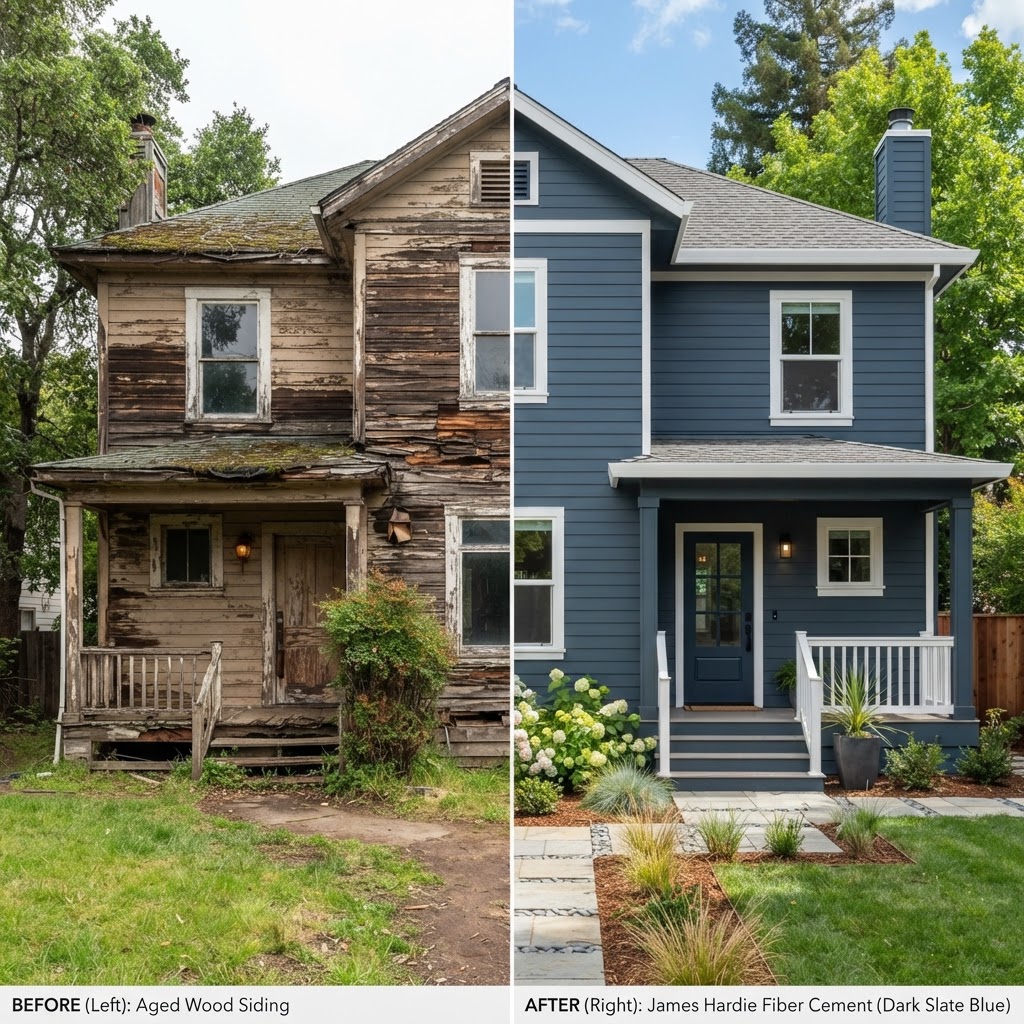
Before & After — Full Exterior Re-Siding
Which Material Fits You
Matched to Your Actual Situation
In a Mapped Fire Hazard Zone
James Hardie or metal siding — both genuinely noncombustible and eligible statewide, including Very High severity zones.
Coastal or Salt-Air Property
Aluminum over steel for metal siding; James Hardie's HZ10 formulation. Watch fastener material either way.
Tightest Budget, No Fire Restriction
Vinyl at premium gauge (~.046"), or corrugated steel — both undercut fiber cement significantly.
Want the Wood Look, Fire Zone Restricted
Woodtone's factory finish on a James Hardie board — the wood aesthetic on a fire-code-compliant substrate.
Sustainability Is the Priority
ACRE's rice-hull composite or metal's recyclability — with the honest caveat that ACRE is newer and Blyss isn't yet certified on it.
Wine Country / Real Wood Aesthetic
Cedar or redwood outside fire zones, or premium James Hardie colors where authenticity matters less than compliance.
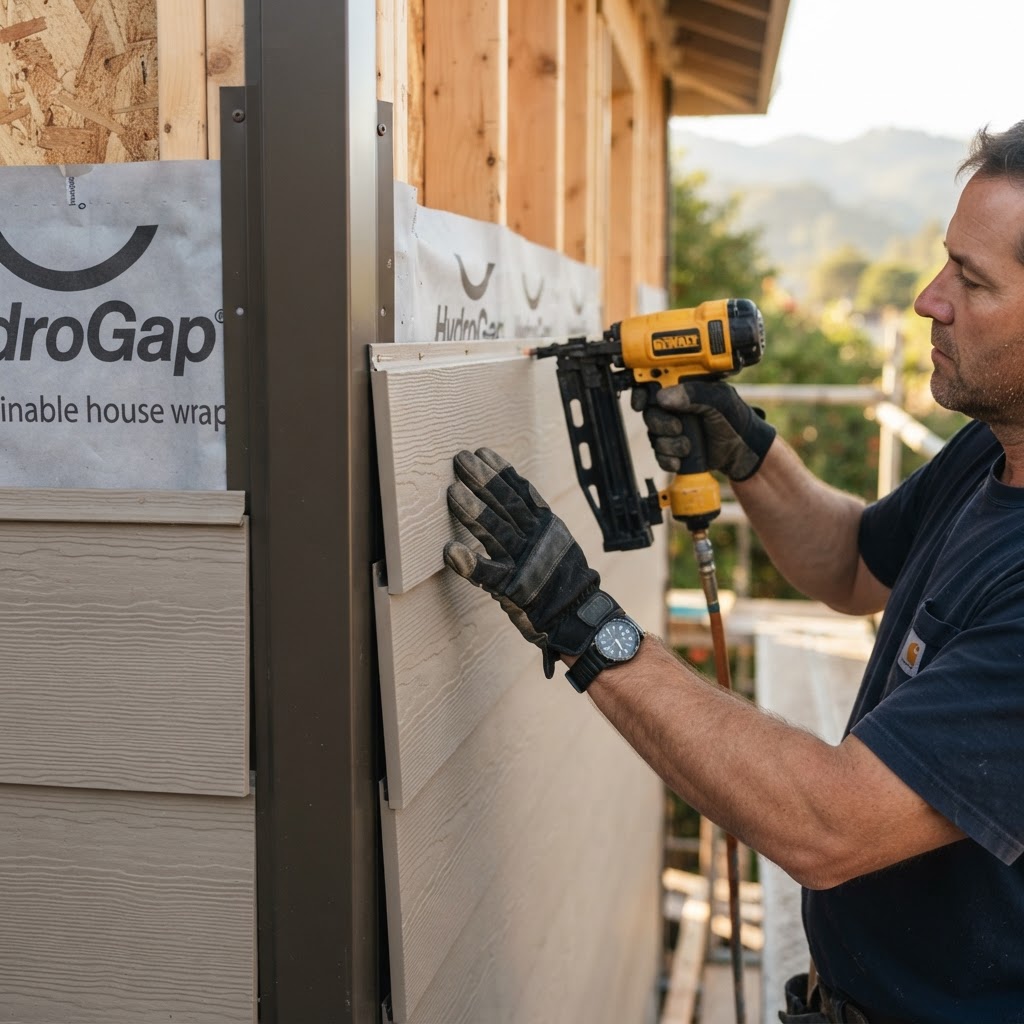
The Installation Standard
The Material Only Works When the Install Is Right
Most siding failures we get called out to fix — early rot, blown warranties, water infiltration — trace back to improper installation, not the product itself. Flashing skipped. Moisture barrier cut short. Vinyl nailed too tight. Cut edges on engineered wood left unprimed past the 180-day window. We install every project to manufacturer protocol because a product only holds its fire rating, moisture resistance, and warranty when it's installed correctly.
Our Process
Eight Steps. One Standard. No Shortcuts.
01
Site Setup
Tarps and protective coverings placed to safeguard landscaping, windows, and hardscaping.
02
Tear-Down
Existing siding removed carefully. Daily job-site cleanup throughout — we never leave a mess overnight.
03
Dry Rot Inspection
Every square foot inspected for dry rot, damaged sheathing, or structural issues. Problems fixed before we move forward.
04
Waterproofing
House wrap and FortiFlash applied at all windows and door openings — every penetration sealed to manufacturer spec.
05
Trim & Soffits
Custom trim and soffit work installed where specified, ensuring clean lines and complete weather sealing at every transition.
06
Siding Installation
Every panel installed to exact manufacturer protocol — spacing, fastening, and flashing all calibrated to preserve your warranty.
07
Paint & Finish
If your siding isn't pre-finished, we apply color to the spec you choose, ensuring a uniform, lasting result.
08
Final Cleanup
We leave the property cleaner than we found it — full debris removal, walkthrough, and your satisfaction confirmed.
The Blyss Standard
Why the Installation Quality Matters
Moisture Barrier
House wrap and Blueskin self-sealing membrane at every opening — zero pathways for water infiltration.
Fire-Zone Compliance
The correct material for your zone, installed as a system — not sold as a standalone fireproof fix.
Proper Flashing
L-flashing at every horizontal transition, no caulk where weep holes are required — dry rot prevention by design.
Undivided Responsibility
One guarantee covering both labor and materials. No finger-pointing between manufacturer and contractor — we own it.
Warranty-Preserving Install
Manufacturer warranties void on improper installs. We follow every spec so your coverage stays in force.
One Standard, Every Crew
One consistent installation method across every crew member. No variable specs, no independent sub-contractors cutting corners.
One Guarantee. Labor and Materials.
Most contractors hand you a manufacturer warranty and walk away. If something fails, responsibility shifts. At Blyss, we issue a single guarantee covering both the product and our installation — undivided responsibility, from first call to final walkthrough. If something isn't right, we fix it.
Where We Serve
Siding Installation Across Northern California
FAQ
Siding Installation — Common Questions
It depends mainly on where your property sits, not just personal taste. James Hardie fiber cement is what we recommend most broadly — it's fire-zone eligible statewide, holds up in valley heat, coastal moisture, and mountain freeze-thaw, and carries the strongest warranty structure of anything we install. Engineered wood (LP SmartSide) is the value alternative outside fire hazard zones. Metal is the other genuinely fire-zone-eligible option, and often the right call on coastal properties where aluminum's corrosion resistance matters. Vinyl is the budget floor, but it's disqualified in most California fire hazard zones. Real wood costs more than all of them and carries no manufacturer warranty at all — Woodtone gives you the wood look on a fire-code-compliant Hardie board instead.
As of January 1, 2026, this falls under California's Wildland-Urban Interface Code (CWUIC, Title 24 Part 7) — the same rules that used to live in Chapter 7A, just relocated. Noncombustible materials qualify outright: James Hardie fiber cement (Class A) and metal siding (ASTM E136) are both eligible statewide. Real wood is combustible (Class B/C) unless it's a specific fire-retardant-treated product with a current OSFM listing. Engineered wood (LP) and vinyl are not eligible as a standalone wall covering in mapped fire hazard zones. ACRE's Shiplap profile specifically holds an OSFM WUI listing as an ignition-resistant material — but that listing doesn't automatically extend to their other profiles. We verify the current listing before recommending anything for a fire-zone property; we don't assume.
Roughly, from cheapest to most expensive installed: vinyl ($3-8/sqft), engineered wood ($6-11/sqft), corrugated metal (~$4.50-8/sqft, standing seam runs closer to $9-15+), James Hardie ($8-15+/sqft), ACRE ($10-12+/sqft), and real wood ($15-25+/sqft) at the top. The cheapest option isn't always the best value once you factor in fire-zone eligibility, warranty coverage, and how often a material needs repainting or replacing.
A proper installation includes: removing the old siding, inspecting for dry rot and structural damage, installing a continuous house wrap moisture barrier, applying FortiFlash or Blueskin self-sealing membrane at all window and door openings, correct L-flashing at every horizontal transition, and finally installing the siding panels to the manufacturer's exact specifications — spacing, fastening pattern, and clearances — to preserve the product warranty. Most siding failures we get called out to fix trace back to a skipped step here, not the material itself.
Yes. Once the old siding is removed, we inspect every square foot of sheathing and framing for dry rot, moisture damage, and mold. Any damage is repaired before the new siding goes on — so your new exterior is built on a solid, healthy substrate. We document all findings and include repair costs in your estimate transparently.
We hold James Hardie Elite Contractor status and LP Certified Installer status — both are real, earned certifications. We also install ACRE, metal, and vinyl siding, matched to your property's needs.
Yes. Blyss backs every project with a labor warranty on top of the manufacturer's product warranty. We maintain undivided responsibility — one guarantee for both the materials and the installation, from one company. If something isn't right, we make it right.
Explore Every Material
Full Material Pages
James Hardie Siding
Fire-zone eligible statewide — our most-recommended material.
Learn MoreEngineered Wood (LP)
Lighter, cheaper — outside fire hazard zones.
Learn MoreMetal Siding
Noncombustible, part of a hardened-home system.
Learn MoreVinyl Siding
The budget floor, with real fire-zone limits.
Learn MoreReal Wood Siding
The authentic look, and the honest trade-offs.
Learn MoreACRE Siding
Rice-hull composite — the eco, stainable option.
Learn MoreFeatured Projects
Real Homes, Real Reviews


Ready for siding that's installed right?
Free, no-pressure estimates across Sacramento, the SF Bay Area, Sonoma County, and Lake Tahoe. Flexible payment plans available.
