Engineered Wood — LP SmartSide
Engineered For Long-Lasting Beauty
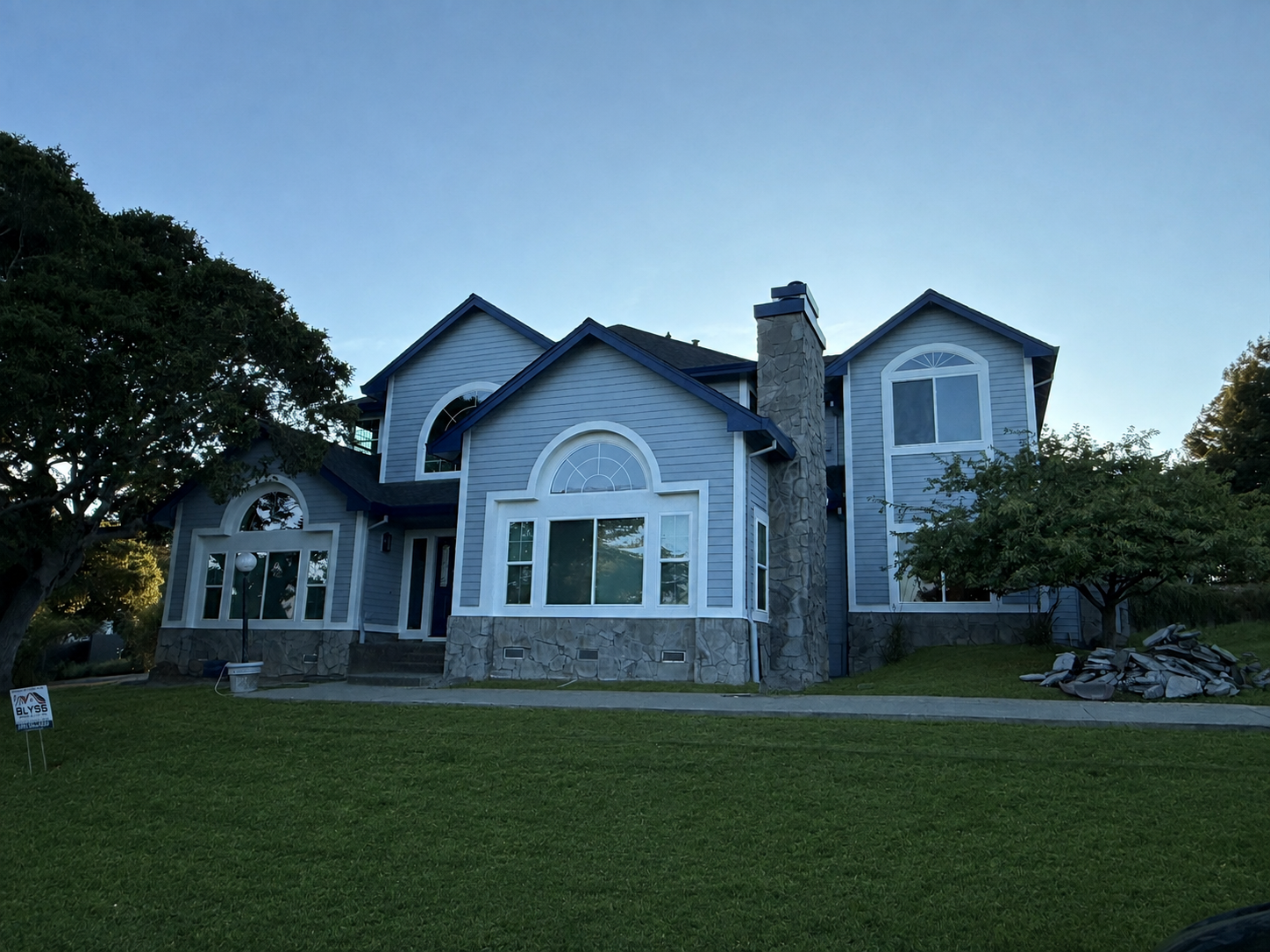
Engineered wood siding installed by an LP Certified crew — lighter and faster to install than fiber cement, at a lower installed cost.
Overview
Where This Fits Against Fiber Cement
Engineered wood siding is real wood strands, bonded under heat and pressure and treated through the entire board rather than just on the surface. It costs less installed than fiber cement, weighs about 40-45% less, and goes up faster because it cuts with the same tools any framing crew already owns.
It's not a straight upgrade over fiber cement in every category, though — fiber cement is non-combustible and engineered wood isn't, and engineered wood needs repainting on a cycle that fiber cement's factory finish avoids. Which one makes sense depends mostly on your fire zone and how you weigh upfront cost against long-term maintenance.
At a Glance
LP Certified
Blyss holds LP's installer certification
~45%
Lighter per sq ft than fiber cement
15-25%
Typically cheaper installed than fiber cement
Fire zone note: Engineered wood is combustible (Class C), not non-combustible like fiber cement. It can meet WUI code only as a specific tested assembly that has to be verified against current local listings. If you're in a mapped fire-hazard area, we'll confirm what's actually approved right now — or point you to James Hardie instead.
SmartGuard® Technology
Treated to the Core, Not Just the Surface
Treated Through the Core
Zinc borate and resin binders run through the entire board, not just a surface coating — the protection doesn't disappear if the board gets scratched or cut.
Impact-Flexible
In manufacturer-sponsored hail testing, panels showed no impact marks from 1.75" hail at 81 mph — where fiber cement dented and vinyl cracked at lower speeds.
Termite & Decay Resistant
The core treatment resists termites, carpenter ants, and fungal decay — the actual failure modes engineered wood is built to prevent.
Standard Tools, No Silica Dust
Cuts with ordinary carbide woodworking blades. No diamond blades, no silica dust control required — a real difference from cutting fiber cement.
Products
Every Profile We Install
Lap Siding
FlagshipHorizontal lap profile with a cedar-grain texture. The flagship product and the one most homeowners picture when they think of engineered wood siding.
Nickel Gap Siding
ModernVertical boards with a consistent nickel-width reveal — a shiplap-style look that's become common in newer NorCal builds.
Panel & Vertical Siding
VersatileFull panels for a clean, contemporary statement. Often paired with lap siding as an accent.
Shake Lap Siding
Cedar LookMolded shakes built to read as natural cedar, without cedar's warping, curling, or splitting over time.
Trim & Fascia
CompleteEngineered trim and fascia boards that match your siding for corners, edges, and finishing details.
Soffit
EssentialVentilated soffit panels that improve airflow and protect the roof structure above.
Color Lines
Three Ways to Finish Your Home
ExpertFinish® Colors
16 ColorsPrefinished at the factory for uniform coverage and UV resistance. No field painting required at install.
ExpertFinish® Naturals
~6 ColorsWood-grain finishes built to read as natural wood tones, without repainting a real wood exterior every few years.
Primed for Paint
CustomPrimed siding takes any field color you choose — full flexibility if you want a color outside the standard lines.
Textures
Two Distinct Finishes
Cedar Texture
A deep cedar-grain texture with real shadow lines — the look most homeowners mean when they say they want a wood exterior.
Brushed Smooth
A cleaner, more contemporary surface for homeowners who want the material's performance without the grain pattern.
A 5/50 Warranty, Extended by Certification
The first 5 years cover full labor and material replacement. After that, it steps down to a 50-year prorated, material-only warranty. Because Blyss is an LP Certified Installer, that initial full-coverage window extends from 5 years to 10 — a direct benefit of who installs it, not just what's installed.
FAQ
Engineered Wood — Common Questions
Yes — Blyss is an LP Certified Installer. LP's certification program (launched in 2022) requires training and inspection, and certified-installer jobs get an extended warranty period over an uncertified install, which is one more reason the crew installing it matters as much as the product itself.
This is the one place we won't oversell it. Engineered wood siding carries a Class C surface-burning rating — it's combustible, unlike fiber cement's non-combustible Class A rating. It can meet California's Wildland-Urban Interface code, but only as a specific tested assembly (particular sheathing, fastening, and joint treatment), and those approved assemblies get re-evaluated periodically. If your property is in a mapped fire-hazard zone — Oakland Hills, Orinda, Lafayette, Moraga, most of the Sierra foothills — we'll confirm the current listed assembly with your local building department before recommending it, and in a lot of those cases we'll point you to James Hardie instead.
It's roughly 40-45% lighter per square foot, cuts with ordinary woodworking tools instead of requiring dust control, and installs faster. It's typically 15-25% cheaper installed than a comparable fiber cement job. The trade-off runs the other way on two things: fiber cement is non-combustible where engineered wood isn't, and engineered wood needs repainting on a roughly 7-15 year cycle that fiber cement's factory finish mostly avoids.
This question comes up, and it's fair to ask. LP's old Inner-Seal OSB siding from the mid-90s did have real rot problems and a class-action settlement. Today's SmartSide is a different, reformulated product line that's been on the market since 1996-97 — a different manufacturing process, not the same siding with a new name.
It's a 5/50 structure, not one flat number. The first 5 years cover 100% of both labor and material if something fails. After that, it steps down to a 50-year prorated material-only warranty, reduced roughly 2.2% per year. Being an LP Certified Installer extends that initial full-coverage period from 5 years to 10 — one more reason certification matters, not just marketing language.
Every cut edge has to be primed and painted within 180 days of installation, and it's the single biggest cause of warranty claims when it's skipped. Moisture gets into an unprotected cut edge and swells the board — a problem that traces back to a missed installation step almost every time, not a flaw in the material itself.
Explore More
Related Services
Ready for engineered wood siding, installed by a certified crew?
Free, no-pressure estimates across Sacramento, the SF Bay Area, Sonoma County, and Lake Tahoe.
