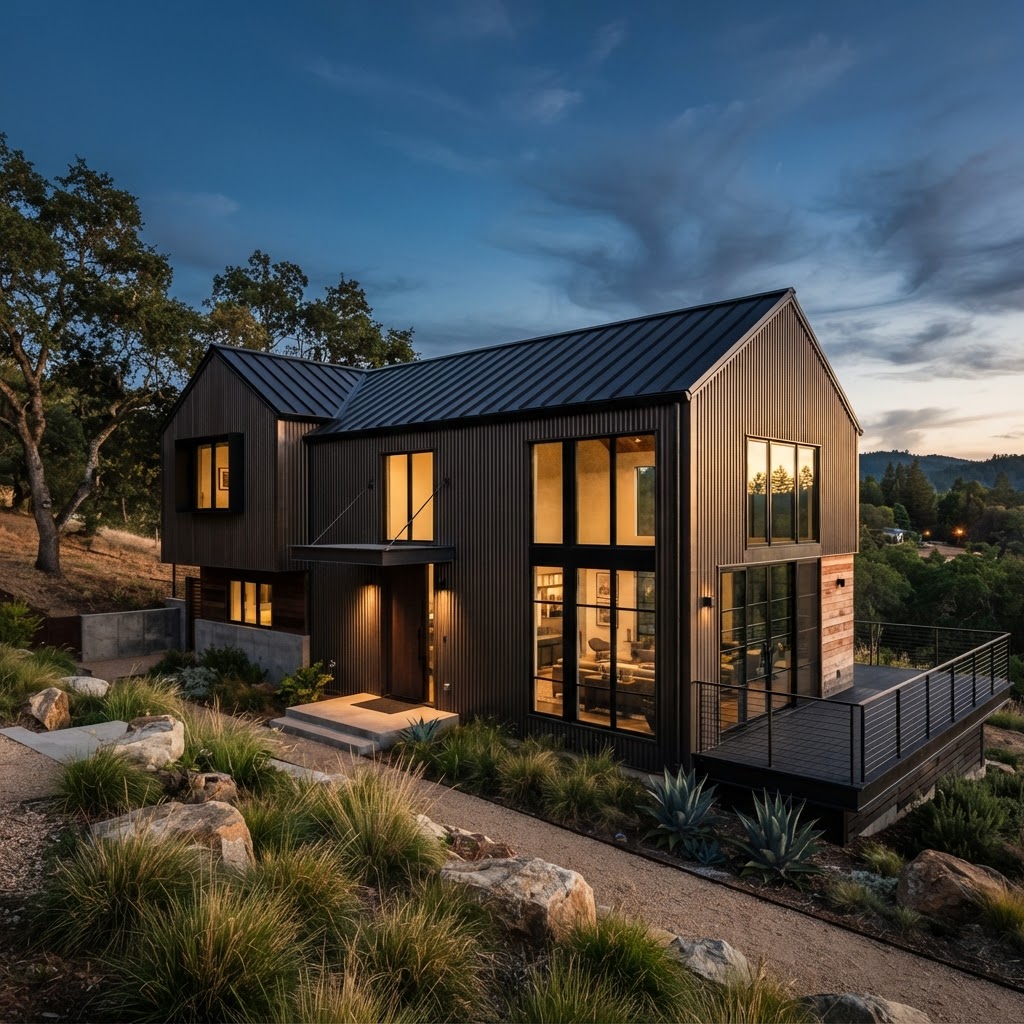
Industrial Siding — Metal
Metal Siding, Part of a Hardened Home
Noncombustible, low-maintenance, and built to last decades — installed as one real piece of wildfire protection, not sold as a standalone fix.
Overview
Noncombustible — And Part of a Bigger System
Metal siding is genuinely noncombustible under ASTM E136 — a more stringent test than the flame-spread rating fiber cement and treated wood carry. That's a real property of the panel. What it isn't is a fireproof guarantee on its own: a 2025 study of the Eaton and Palisades fires found windows were frequently the actual point of failure, not siding.
We install metal siding as one real piece of a hardened home — paired with ember-resistant vents and the right windows — not as a standalone fix sold on fear.
ASTM E136
Noncombustible — a stricter test than Class A
20-50+ yr
Lifespan; the finish is the limiting factor
Recyclable
At end of life, unlike vinyl or fiber cement
Wide Range
From budget corrugated to premium zinc/copper
Metal Types
Coastal and Inland Need Different Metal
Steel (Galvalume)
Inland PickThe workhorse — best dent and hail resistance, stable in Central Valley heat swings. Corrodes at cut edges and fasteners in salt air; most finishes aren't warrantable close to the coast.
Aluminum
Coastal PickNaturally corrosion-resistant with no iron to rust — the coastal pick. Trade-off: dents more easily than steel, including from hail, ladders, and hard pressure washing.
Zinc
PremiumSelf-healing patina, 80-100+ year lifespan. Premium architectural metal, priced well above steel and aluminum.
Weathering Steel (Corten)
Accent OnlyForms a rust patina used as an accent. Real caveat: rust runoff permanently stains nearby concrete, stone, and sidewalks if it isn't channeled away.
Coastal properties: Most steel finishes aren't warrantable within a set distance of salt water — it's a real catch we see homeowners run into after the fact. For coastal jobs, we spec aluminum substrate with 316 stainless steel fasteners and clips, not steel, so the warranty actually holds.
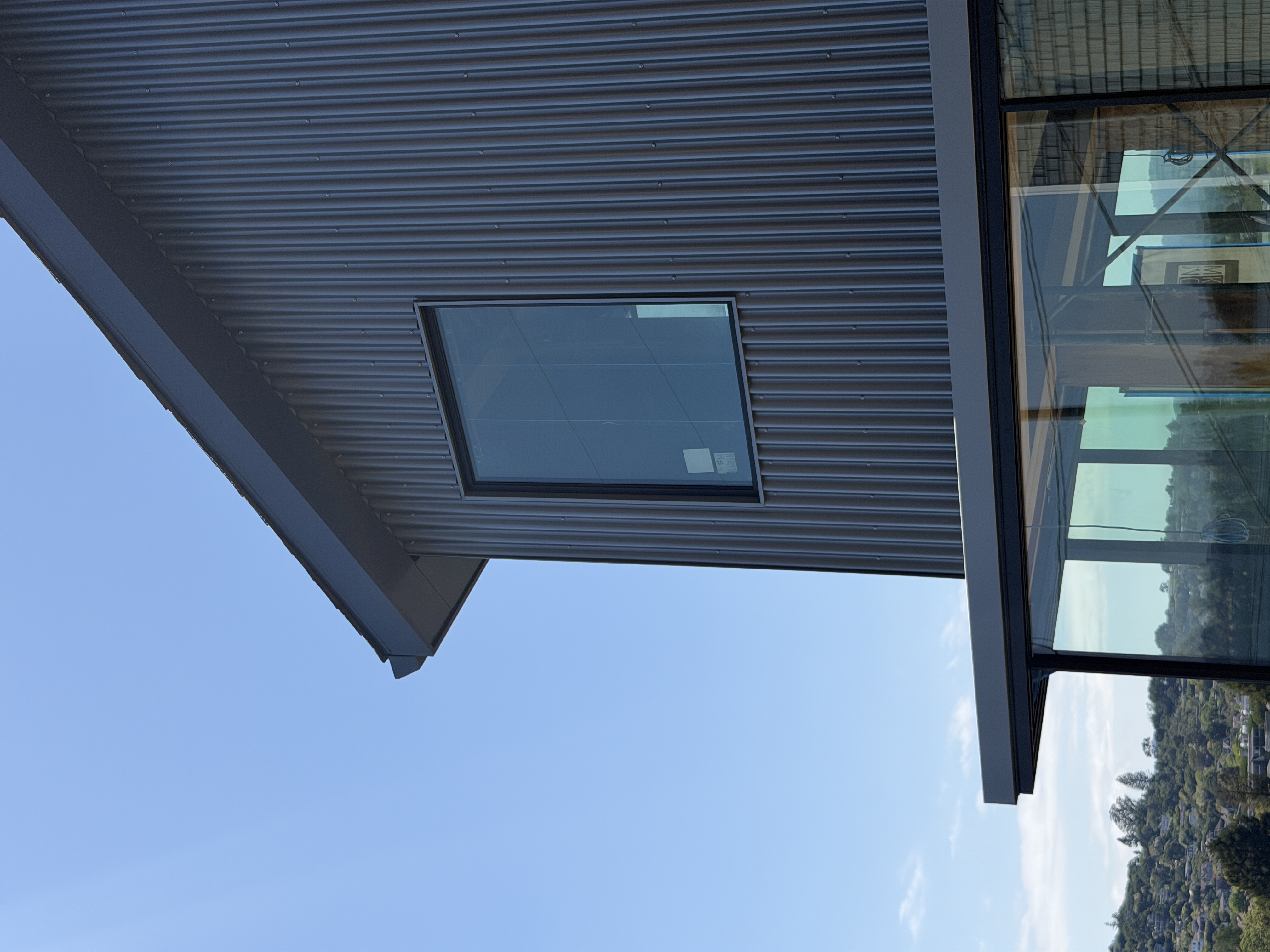
Panel Profiles
Every Profile We Install
Corrugated / R-Panel
The most affordable profile. Exposed fasteners, and the wavy shape naturally hides oil canning — a practical choice, not just a rugged-industrial look.
Standing Seam
Concealed fasteners and the best wind and weather performance of any metal profile. The premium tier, priced accordingly.
Flat / Flush Panel
The most modern, monolithic look — and the highest risk of visible oil canning in direct afternoon sun. We'll set expectations before you commit to this one.
Board & Batten Metal
A modern-farmhouse profile that reads less industrial than corrugated while keeping metal's durability.
Finish Coatings
The Coating Determines How Long It Looks New
PVDF / Kynar
PremiumBest fade and chalk resistance available — a 30-40 year finish warranty, and the only coating that reliably holds dark colors long-term.
SMP
Mid-TierShorter fade and chalk coverage than PVDF. Common on lighter-gauge, more budget-conscious panels.
Polyester
BudgetFades and chalks the fastest of the three. The cosmetic finish, not the rust protection underneath, is what wears first.
Why Metal
The Real Benefits
Noncombustible
ASTM E136 — meets California's Wildland-Urban Interface Code as one part of a hardened home.
Won't Rot
No moisture-driven decay the way wood and engineered wood can experience.
Pest-Proof
Nothing for termites or woodpeckers to get through.
Handles Wind Well
Standing seam in particular is engineered for high-wind performance.
Recyclable
Unlike vinyl or fiber cement, it doesn't just go to landfill at end of life.
Fast Installation
Large panels go up quickly on straightforward wall runs.
Worth Knowing Up Front
The Honest Trade-Offs
Denting
Aluminum in particular can dent from hail, ladders, or aggressive pressure washing. Heavier-gauge steel resists this much better.
Repair & Color-Matching
A dented panel is genuinely hard to fix cleanly, and matching a faded or discontinued color years later is often not possible. Worth thinking about before you choose a limited-run color.
Thermal Bridging
Steel conducts heat and adds zero R-value on its own — it needs to sit outside the thermal envelope with proper insulation behind it.
Corten Staining
Weathering steel's rust patina looks great as an accent, but the runoff will permanently stain nearby concrete or stone if it isn't channeled away.
Applications
Where Metal Siding Works
FAQ
Metal Siding — Common Questions
The panel itself is noncombustible (ASTM E136) and meets California's Wildland-Urban Interface Code — but we won't oversell it as a standalone fix. A 2025 study of the Eaton and Palisades fires found windows were often the actual point of failure, not siding. Metal siding is one real part of a hardened home — paired with ember-resistant vents and the right windows, not a fireproof guarantee on its own.
It comes down to where you are. Steel handles dents and hail better and is generally cheaper, but most steel finishes aren't warrantable close to salt water — coastal jobs need aluminum, and we spec 316 stainless fasteners to go with it. Inland and foothill properties are usually better served by steel.
No — that reputation comes from metal roofs on open barns and sheds with no insulation or roof deck underneath. On an actual insulated wall assembly, rain noise isn't a real issue. What you might actually notice is a faint ticking or pinging sound from thermal expansion, especially on a south-facing wall in direct sun — that's normal, not a defect.
Oil canning is the slight waviness you sometimes see in flat metal panels, especially in afternoon light — it's cosmetic, not a defect, and it can't be fully eliminated on light-gauge flat panels. Corrugated and ribbed profiles hide it well; if you want a flush, flat look, we'll set honest expectations on this before you choose that profile.
California requires insurers to offer mitigation discounts for wildfire-hardening features under the state's Safer from Wildfires rule, so there's a real basis for some discount. We won't promise you a number, though — that depends on your specific carrier and policy, so we'd point you to them directly to confirm.
It's a wider range than most siding categories, not one price point. Corrugated steel often lands close to LP SmartSide, roughly $4.50-8 per square foot. Standing seam runs closer to $8.82-14.67 per square foot installed, higher in Bay Area metros. Zinc and copper sit well above that. We'll tell you exactly where your project lands before any work starts.
Explore More
Related Services
Ready for metal siding, specced right for your property?
Free, no-pressure estimates across Sacramento, the SF Bay Area, Sonoma County, and Lake Tahoe.
