
Natural Siding — Wood
Real Wood Siding, Done Right
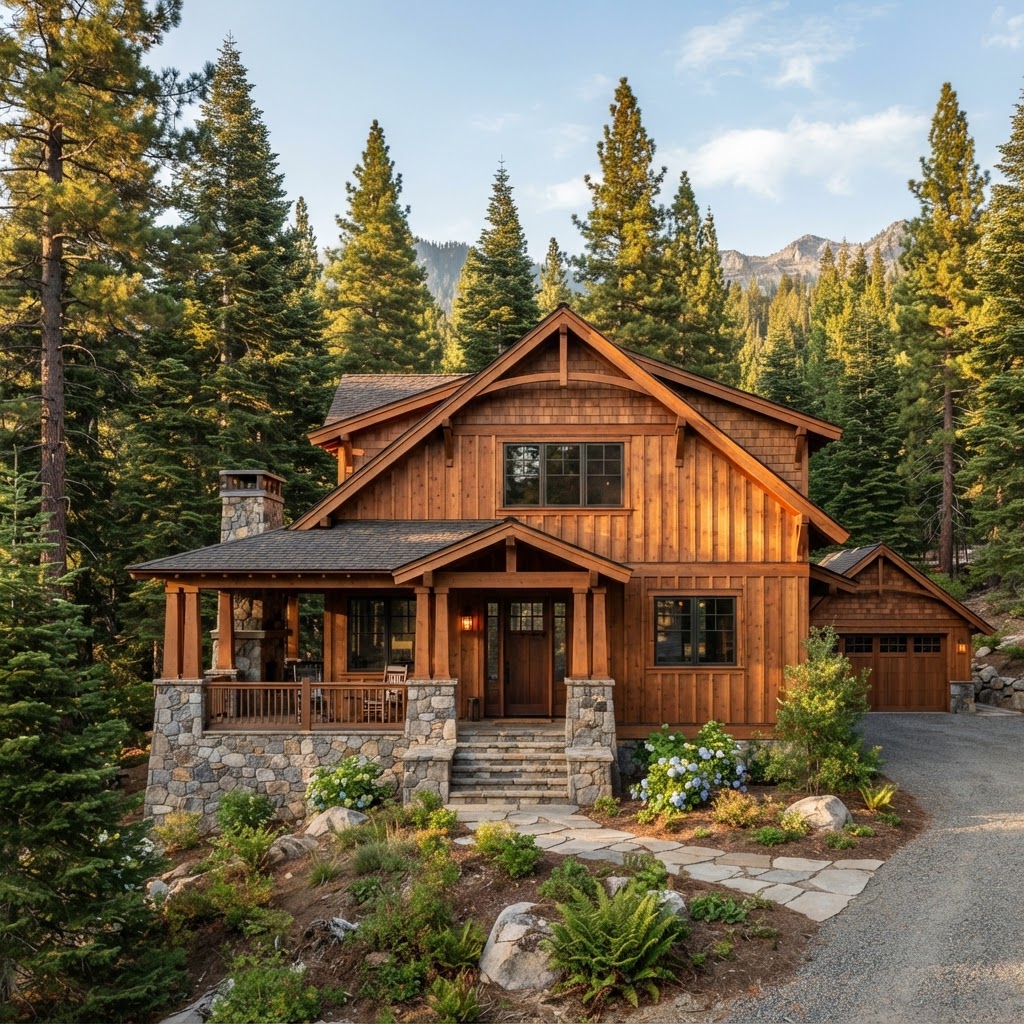
Cedar and redwood deliver a look nothing synthetic fully replicates — and we'll walk you through exactly what it takes to keep it looking that way for decades.
Overview
The Look Nothing Else Fully Replicates
Every other siding material on this site is, in some sense, trying to replicate what wood does naturally. That authenticity is real. So are the trade-offs: no manufacturer warranty stands behind it, it costs more installed than fiber cement, and it asks for genuine ongoing upkeep. We'll give you the honest version before you commit, not after.
Genuinely Repairable
Replace a single plank, not a wall
Real Upkeep Required
Refinishing on a real recurring cycle
Fully Customizable
Stain, paint, or leave natural
Timeless Look
Works on any architectural style
No manufacturer warranty: Unlike Hardie's 30-year or LP's 5/50, raw wood siding is graded lumber, not a branded system — there's no manufacturer standing behind it. Grade takes the place of a warranty: Clear grades are essentially knot-free and premium-priced, Knotty grades are more casual-looking and more affordable. Your real assurance is our installation and the finish we put on it.
Wood Species
Four Species, Two Different Stories
Western Red Cedar
Most PopularThe species most homeowners mean when they picture wood siding. Natural oils give it real decay and insect resistance on their own — the only wood species here that's genuinely durable without heavy reliance on finish.
Redwood
PremiumCalifornia-native, dimensionally stable, with the same natural decay resistance as cedar. Old-growth scarcity has pushed prices up — this is the premium tier, not the value option.
Pine
ValueHas no natural decay resistance at all — it survives only as long as the finish stays intact and sealed. Cheaper as raw material, but that savings gets eaten by more frequent refinishing.
Spruce & Fir
VersatileAlso no inherent decay resistance. Light, workable, and takes paint well, but depends entirely on disciplined maintenance to perform, same as pine.
Profiles
Every Wood Siding Style We Install
Shiplap
Tight-seam horizontal boards — the modern farmhouse staple.
Clapboard
Tapered horizontal planks — the classic American siding profile.
Board & Batten
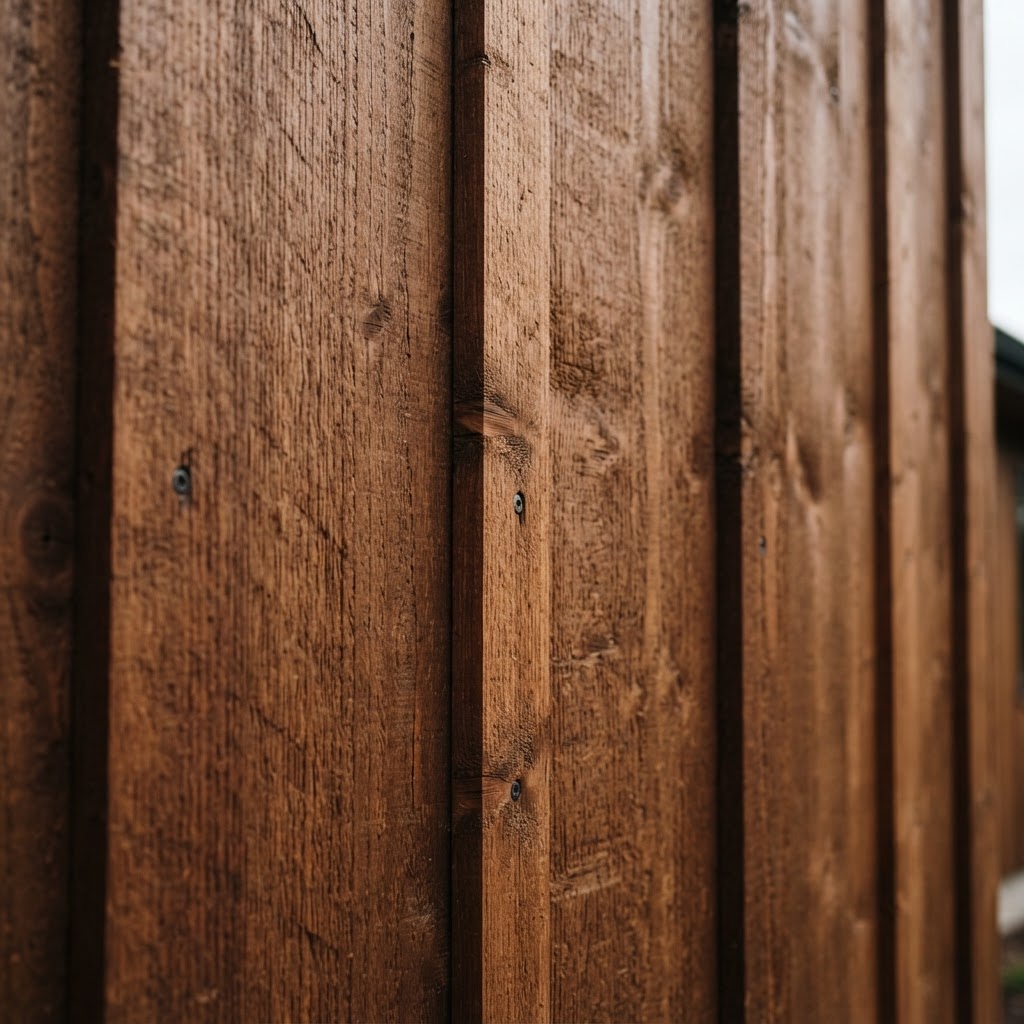
Vertical boards with batten strips — drains well, rustic character.
Tongue & Groove
Interlocking boards for a near-seamless, weather-tight connection.
Finishes
Finish Options
Want the Look, Not the Fire Risk?
Ask About Woodtone
Real wood is combustible, full stop — and in a genuine wildfire-hazard zone, that's usually a dealbreaker no matter how much a homeowner wants the look. Woodtone's RusticSeries is a factory-applied, two-tone wood-look finish over a James Hardie fiber cement board. It reads as stained wood from the curb, but the board underneath carries fiber cement's Class A, non-combustible rating.
This comes up most in Sonoma and Napa County hillside properties — towns like St. Helena, where the wine-country aesthetic is part of the point, but the fire code isn't optional. When the wood look and a real WUI requirement both matter, this is usually the honest answer, not a compromise between the two.
One detail worth knowing: fire performance depends entirely on the substrate underneath the Woodtone finish. Specced on fiber cement, it's WUI-eligible. Specced on engineered wood or as a coating over solid cedar, it isn't. We always confirm the substrate and the current listing before recommending it for a fire-zone property.
Ask us if it fits your propertyThe Real Maintenance Cycle
- Refinish roughly every 4-9 years, depending on sun and weather exposure
- Restain every 2-4 years — clear finishes need it every 1-2 years
- Repairable board-by-board instead of re-cladding a whole wall
- Inspect annually — moisture and pest damage catch early, or not at all
Pests, Not Just Weather
- Woodpecker damage is a real, common complaint — not a rare fluke
- Rough, stained cedar and redwood draw more attention than smooth painted wood
- Biodegradable and lower-carbon than synthetic siding over its life
- Cedar & redwood sourced from responsibly managed forests
FAQ
Wood Siding — Common Questions
Western Red Cedar and California Redwood are the top choices — both have natural decay and insect resistance built into the wood itself, not just the finish. Pine and spruce are cheaper as raw material but have no inherent decay resistance; they only perform as long as you keep the finish intact, which means more frequent upkeep.
No — and this is the biggest practical difference from fiber cement or engineered wood. Raw wood siding is graded lumber, not a branded system, so there's no manufacturer warranty behind it. The real assurance is our workmanship and the finish we apply. Wood is sold by grade instead: Clear grades are essentially knot-free and premium-priced, Knotty grades are more casual-looking and more affordable.
More than any other siding we install, and it's worth being direct about that going in. Plan on refinishing roughly every 4-9 years depending on sun and weather exposure, restaining every 2-4 years, and if you choose a clear finish, that drops to every 1-2 years. This is the defining, ongoing cost of owning wood siding — factor it in before you commit, not after.
Yes, and it's a more common complaint than most homeowners expect going in — one survey found roughly a third of wood-sided homes had woodpecker damage. Rough, stained cedar and redwood draw more attention than smooth painted wood. It's a real trade-off of the natural look, not a rare fluke.
Standard wood siding is combustible — Class B or C, well below fiber cement's Class A. Fire-retardant-treated wood can reach Class A, but only if it's a specific exterior-rated product that's currently listed with CAL FIRE's OSFM, and that listing has to be verified, not assumed. In a real WUI zone, we're straightforward with clients: standard wood siding generally doesn't clear code, and even listed FRT wood is a compromise, not fiber cement's equal.
Yes — this is exactly the situation Woodtone's RusticSeries solves. It's a factory-applied, two-tone wood-look finish over a James Hardie fiber cement board, not real wood. Specced correctly, it inherits fiber cement's Class A, non-combustible rating while still reading as a genuine stained-wood exterior. We see this most in Sonoma and Napa County hillside properties — St. Helena is a good example — where the wine-country wood aesthetic matters but the fire code is real and non-negotiable.
More than most homeowners expect walking in: installed cedar commonly runs $15-25 per square foot, which is above both James Hardie ($8-15) and engineered wood ($6-11), not a budget alternative to either. Pine is cheaper as raw material, but priming and refinishing costs eat into that gap over the life of the siding.
Explore More
Related Services
Ready for wood siding, or the wood look without the fire risk?
Free, no-pressure estimates across Sacramento, the SF Bay Area, Sonoma County, and Lake Tahoe.
